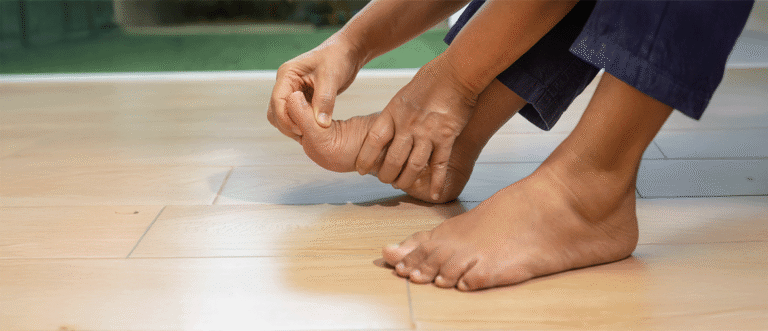
DDH Disease & Developmental Dysplasia of the Hip Pune
Seek trusted DDH treatment in Pune with experienced pediatric orthopedic surgeons providing early diagnosis, stabilisation, and corrective surgery for hip dysplasia in babies and children.
Overview
Developmental dysplasia of the hip (DDH) is a common pediatric DDH disease where the hip joint fails to develop properly. In this condition, the ball-shaped top of the thigh bone (femur) and the cup-shaped hip socket (acetabulum) do not fit together correctly. This misalignment can range from a slightly loose joint to a completely dislocated hip where the ball sits entirely outside the socket.
Early detection is key to successful DDH treatment outcomes. Without timely intervention, children with DDH disease may experience long-term complications including chronic pain, difficulty walking, and early arthritis. With appropriate care, however, most children with hip dysplasia in babies and older children go on to live completely normal, active lives.
Symptoms of DDH Disease in Children
DDH symptoms can be subtle, especially in newborns and infants. Many babies with developmental dysplasia of the hip appear completely normal and do not experience pain initially. Parents and caregivers should watch carefully for these warning signs:
In Newborns and Infants:
- Uneven hip dysplasia skin folds on the thighs or buttocks
- Limited hip flexibility or resistance when changing diapers
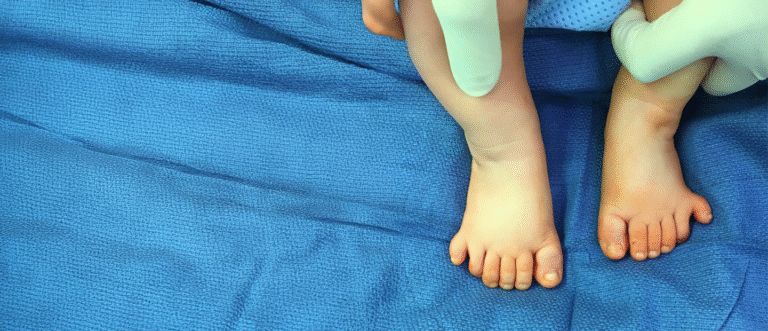
- One leg appearing shorter than the other
- Clicking or popping sounds when moving the hip joint
- Difficulty spreading the legs during diaper changes
In Toddlers and Older Children:
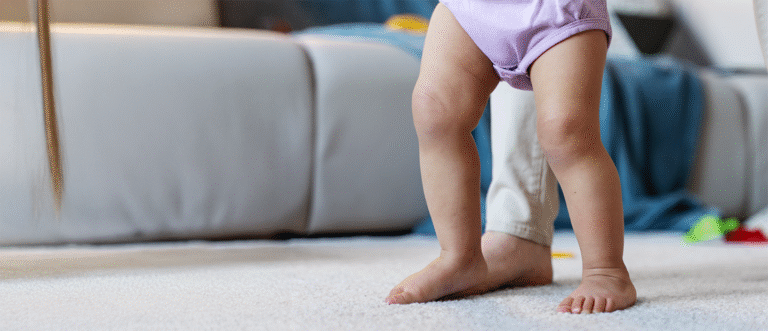
- Delayed walking or reluctance to bear weight on the affected side
- Limping or waddling walk indicating possible DDH in kids
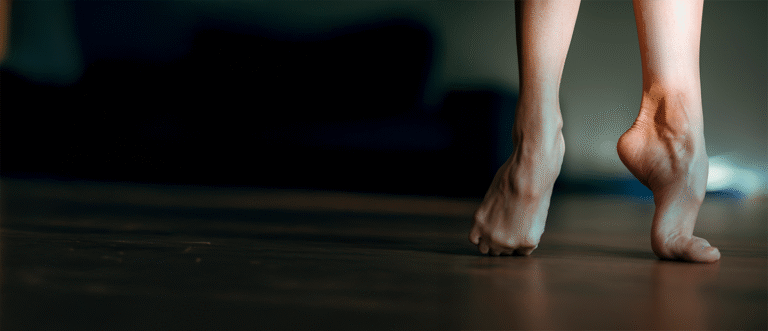
- Toe walking on the affected side
- Back pain caused by compensating for underlying hip problems
- Fatigue or discomfort during physical activities
Causes of Developmental Dysplasia of the Hip
DDH disease results from a combination of factors that affect normal hip joint development during pregnancy and early infancy. The condition occurs when the hip socket fails to form properly, leading to instability or dislocation.
Several factors contribute to developmental dysplasia of the hip:
- Genetic Factors: Family history plays a significant role in DDH in children. If a parent or sibling has had DDH disease, the risk increases substantially
- Mechanical Influences: When a baby is positioned in the womb with limited space for movement, abnormal pressure on the developing hip joint can lead to dysplasia in hip dysplasia in babies
- Hormonal Factors: Maternal hormones during pregnancy can cause increased looseness in the baby’s ligaments, making the hip joint more susceptible to instability
- Environmental Factors: Practices after birth, such as tight swaddling with legs held straight and pressed together, can worsen existing hip instability or contribute to DDH development
Risk Factors for DDH in Children & Babies
Understanding the risk factors for developmental dysplasia of the hip helps parents and DDH orthopedics specialists identify babies who need closer monitoring. Several factors increase the likelihood of DDH disease:
- Gender: Girls are 4–5 times more likely to develop DDH than boys, partly due to greater sensitivity to maternal hormones affecting ligament laxity
- Birth Position: Babies born in breech position (buttocks or feet first) carry a significantly higher risk due to abnormal hip positioning during delivery
- Family History: DDH has a strong genetic component. Children with affected parents or siblings face a notably increased risk
- Birth Order: Firstborn children are more susceptible to DDH in kids due to tighter uterine muscles that restrict fetal movement
- Pregnancy Conditions: Low amniotic fluid (oligohydramnios) can limit fetal movement and raise DDH risk
- Associated Conditions: Foot deformities, neck muscle tightness (torticollis), or other musculoskeletal abnormalities often occur alongside DDH disease
How DDH Disease is Diagnosed
Developmental dysplasia of the hip diagnosis relies on a combination of physical examination and imaging studies. Early and accurate diagnosis by a DDH orthopedics specialist is crucial for optimal treatment outcomes.
Physical examination forms the foundation of DDH diagnosis. Pediatricians routinely screen newborns using specific clinical manoeuvres:
- Ortolani test: Attempts to relocate a dislocated hip back into the socket
- Barlow test: Tries to dislocate an unstable hip from the socket
- Assessment of hip flexibility : and range of motion for signs of DDH in babies
- Examination of leg lengths: and hip dysplasia skin fold symmetry
Imaging studies provide detailed information about hip structure:
Ultrasound is the preferred diagnostic method for babies under 6 months, as their bones are still cartilaginous and do not show clearly on X-rays. This painless test provides real-time images of the hip joint.
X-rays become useful after 6 months when bones have developed sufficiently. These images help evaluate bone alignment and assess the degree of DDH disease.
Clinical monitoring continues throughout childhood, with regular check-ups by DDH in ortho specialists to assess hip development and function, especially in high-risk children.
Types of Developmental Dysplasia of the Hip
DDH disease exists along a spectrum of severity, with different types requiring varying approaches to DDH treatment:
- Subluxatable Hip: The femoral head is not fully seated in the socket but can be partially displaced with manipulation — often identified during routine DDH orthopedics screening
- Dislocatable Hip: The femoral head can be moved in and out of the socket during clinical examination, indicating significant hip joint instability
- Dislocated Hip: The most severe form of DDH disease, where the femoral head sits completely outside the acetabulum socket at rest
- Acetabular Dysplasia: Involves a shallow hip socket while the ball remains in place, potentially leading to progressive instability and complications if left without DDH management
DDH Treatment Options by Age
- DDH treatment varies significantly based on the child’s age at diagnosis and the severity of developmental dysplasia of the hip. Early intervention generally leads to better outcomes with less invasive approaches — a key reason why timely DDH management is strongly recommended
- Newborns to 6 Months: The Pavlik harness is the gold standard DDH treatment for young infants. This soft brace holds the hips in an optimal position that promotes normal joint development. The harness is worn continuously for 6–12 weeks, with regular monitoring by a DDH orthopedics specialist to ensure proper positioning
- Infants 6 Months to 2 Years: Closed reduction may be necessary if the Pavlik harness fails or if diagnosis occurs later. Under anaesthesia, the pediatric orthopedic surgeon gently repositions the hip, followed by a spica cast to maintain alignment for 3–6 months
- Open Reduction: Becomes necessary when closed reduction fails. This DDH surgery involves making an incision to directly place the hip in the correct position, often combined with tightening of the hip capsule
- Older Children: DDH surgery at this stage typically involves more complex procedures such as osteotomies — bone cuts to reshape the hip socket or thigh bone — improving joint stability and long-term function
- Physical therapy supports all DDH treatment approaches by maintaining muscle strength, flexibility, and promoting normal movement patterns
Rehabilitation After DDH Treatment
Rehabilitation plays a vital role in DDH recovery, helping children achieve optimal hip function and preventing long-term complications. The rehabilitation process is carefully tailored to each child’s age, DDH treatment stage, and individual needs.
Goals of rehabilitation include:
- Restoring normal hip mobility and flexibility following DDH disease treatment
- Strengthening muscles around the hip joint to support proper alignment
- Promoting correct walking patterns and gait development in DDH in children
- Preventing muscle contractures, joint stiffness, and recurrence of instability
Complications of Untreated DDH Disease
Untreated or inadequately managed DDH disease can lead to significant long-term complications that affect quality of life and mobility:
- Early-Onset Arthritis: The most serious long-term complication of unmanaged developmental dysplasia of the hip, occurring when abnormal hip mechanics cause premature joint wear and tear
- Chronic Hip Pain: May develop as the child grows, particularly during physical activity or after prolonged sitting — a common concern in untreated DDH in children
- Abnormal Gait Patterns: Persistent limping, waddling, or other compensatory walking patterns that affect the entire musculoskeletal system
- Leg Length Discrepancy: Abnormal hip development from DDH disease may result in unequal leg lengths, potentially requiring shoe lifts or additional DDH surgery
- Reduced Hip Mobility: Can limit participation in sports and physical activities, affecting overall fitness and social development in DDH in kids
- Avascular Necrosis: Though rare, this serious complication occurs when blood supply to the femoral head is disrupted, leading to bone damage and requiring complex DDH management
Can DDH Disease Be Prevented?
While not all cases of developmental dysplasia of the hip can be prevented, several measures can reduce risk and support early detection — especially important given that DDH is curable when caught early:
- Routine Newborn Screening: Ensures early identification of hip abnormalities in babies when DDH treatment is most effective and least invasive
- Safe Swaddling Practices: Parents should use hip-friendly swaddling techniques that allow the hips and legs to move freely in their natural “frog-leg” position to avoid stressing the developing joint
- Awareness in High-Risk Families: Promotes vigilance for DDH symptoms in children with known risk factors such as breech presentation or family history of DDH disease
- Regular Pediatric Check-ups: Allow for ongoing monitoring of hip dysplasia in babies and toddlers, especially during the first year of life
- Prenatal Care: Helps identify risk factors such as breech positioning or low amniotic fluid that may increase the likelihood of DDH in children
Living With DDH Disease — What Families Should Know
A DDH disease diagnosis can feel overwhelming for families, but understanding the condition and available DDH treatment options helps parents navigate the journey with confidence. Most children who receive timely care go on to lead completely normal, active lives.
- During Treatment: Families must maintain regular follow-up appointments with their DDH orthopedics team, adhere to harness or cast care instructions, and monitor for any concerning DDH symptoms. Support from pediatric orthopedic surgeons, physical therapists, and specialised nurses ensures comprehensive, family-centred care
- Long-Term Outlook: Generally excellent with proper DDH management. Most children achieve normal hip function and can participate fully in sports and physical activities. However, some may require ongoing monitoring into adulthood to ensure continued hip health
- Emotional Support: Connecting with support groups, educational resources, and families who have navigated similar DDH in children experiences can provide valuable guidance and reassurance
- Activity Modifications: May be temporarily necessary during DDH treatment, but most children can safely return to normal activities once treatment is complete
Key Takeaways
- Developmental dysplasia of the hip is a treatable DDH disease affecting hip joint development that requires early detection for the best possible outcomes
- Early intervention is critical — the Pavlik harness is highly effective for hip dysplasia in babies under 6 months and significantly reduces the need for DDH surgery
- Regular screening and awareness of risk factors help identify DDH in children before serious complications develop
- DDH treatment success depends on the child’s age at diagnosis and the severity of the condition — reinforcing why prompt DDH management matters
- Is DDH curable? Yes — most children with properly treated developmental dysplasia of the hip achieve normal hip function and lead fully active lives
- At Sancheti Hospital, our experienced pediatric orthopedic specialists provide comprehensive DDH disease care with advanced diagnostic capabilities and multidisciplinary rehabilitation services, ensuring the best outcomes for every child with hip dysplasia
Meet Our Pediatric Orthopedic Specialists
Patient Stories & Experiences
Real stories from real patients — see why thousands trust Sancheti Hospital, Pune for orthopaedic care, knee replacement & spine surgery.

The pain in my left knee left me feeling helpless for years. After my treatment here, I can finally say I'm pain-free.
Vinita Singh

The nerves were swollen, and the body went numb. But thanks to Sancheti Hospital, I got a second life!
Parvati

I finally could walk again, a relief I've only felt after the hip pain surgery. I thank the doctors at Sancheti Hospital for their help.
Balaji Kharat

I'm a police officer, and I'm extremely thankful to Sancheti Hospital for treating my fracture without surgery.
Shantilal

My life has completely changed after the knee replacement surgery at Sancheti Hospital. It's like I can finally live again!
Kalpana Lepcha
The knee pain I've carried for years finally went away with the help of Sancheti Hospital.
Karuna
I can't believe that I get to finally live a normal and happy life, all thanks to the knee surgery I had at Sancheti Hospital.
Kishore Bhosle

Other Conditions
Frequently Asked Questions
Can DDH be detected before birth?
DDH cannot be directly diagnosed before birth, but prenatal ultrasounds may identify risk factors such as breech positioning that increase the likelihood of developing the condition.
Is DDH painful for babies?
Most infants with DDH do not experience pain initially. Pain typically develops later if the condition remains untreated and leads to joint problems or arthritis.
Will my child need surgery for DDH?
Not all children require surgery. Early-detected DDH can often be successfully treated with a Pavlik harness. Surgery is reserved for cases where non-surgical methods fail or when diagnosis occurs later.
How long does treatment take?
Treatment duration varies by method and severity. Pavlik harness treatment typically lasts 6-12 weeks, while surgical cases may require several months of casting followed by rehabilitation.
Can DDH affect both hips?
Yes, DDH can affect one or both hips, though unilateral (one-sided) involvement is more common. Both hips are always evaluated during diagnosis and treatment planning.
Home
Patient Login
International patients
Contact Us
Emergency
Download Reports