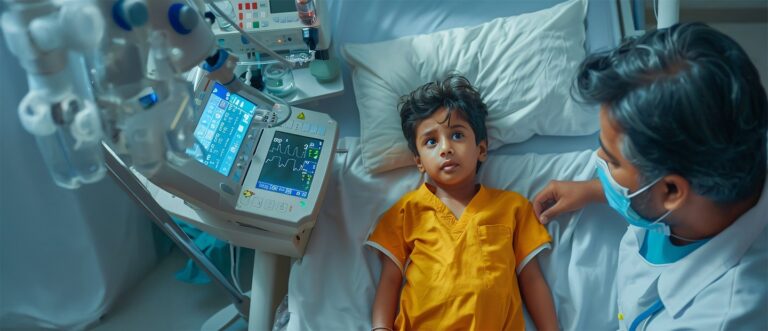
Unicameral Bone Cyst Pune
Sancheti Hospital offers advanced treatment for Unicameral Bone Cysts through minimally invasive surgery and orthopedic precision to restore bone health.
Overview
A unicameral bone cyst (UBC), also called a simple bone cyst, is a common benign bone tumor that creates a fluid-filled cavity inside bones. These cysts mainly affect children and adolescents during their growing years. The name “unicameral” means “one chamber,” which perfectly describes these single-space cysts filled with fluid.
These benign growths are not cancerous and don’t spread to other parts of the body. They most commonly develop in long bones, especially the proximal humerus (upper arm bone) and proximal femur (thigh bone). Boys are affected more often than girls, with a ratio of about 2:1 to 3:1.
Most unicameral bone cysts don’t cause any symptoms and are often found accidentally during X-rays taken for other reasons. However, they can weaken the bone and lead to pathologic fractures – breaks that happen because the bone becomes fragile.
Symptoms
Most children and adolescents with unicameral bone cysts don’t experience any symptoms unless a pathologic fracture occurs. The cyst gradually weakens the bone, making it more likely to break even with minor injuries.
When a pathologic fracture happens, symptoms include:
- Sudden, sharp pain at the fracture site
- Swelling and bruising around the affected area
- Difficulty moving the limb or reduced range of motion
- Visible changes in bone shape or alignment
Some children might occasionally experience mild symptoms like slight pain, swelling, or tenderness near the cyst location, even without a fracture. For cysts in the spine, symptoms may include back pain or other spinal problems.
Causes
The exact cause of unicameral bone cysts remains unknown, but researchers have developed several theories:
Bone Growth Problems: One theory suggests these cysts form due to defects in normal bone development. This leads to fluid-filled cavities that gradually expand and weaken the surrounding bone.
Blood Flow Issues: Another widely accepted theory proposes that cysts develop from blocked blood vessels in the spongy bone tissue. This blockage causes fluid buildup, creating pressure that forms the cyst. High levels of inflammatory substances found in cyst fluid support this theory.
Genetic Factors: Recent research has found that some unicameral bone cysts contain cells with specific gene changes. This discovery suggests these cysts might actually be true growths rather than just reactive formations.
Trauma Role: While some experts wonder if repeated injuries might contribute to cyst development, this connection hasn’t been proven definitively.
Risk Factors
Several factors increase the likelihood of developing unicameral bone cysts or experiencing complications:
Age: These cysts are most common in children and adolescents between ages 5 and 15. Younger children, especially those under 10, tend to have more aggressive cysts with higher recurrence rates after treatment.
Gender: Males are affected more frequently than females.
Cyst Location: The position relative to the growth plate matters significantly:
- Active cysts sit near the growth plate and continue growing, causing more problems
- Latent cysts have moved away from the growth plate and are generally more stable
Cyst Size: Larger cysts or those with very thin walls pose higher risks for pathologic fractures.
Diagnosis
Diagnosing unicameral bone cysts typically involves several steps:
Medical History and Physical Exam: Doctors assess any pain, swelling, or functional problems the patient experiences.
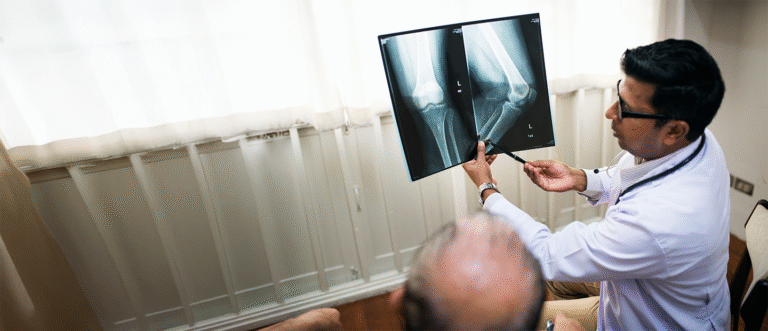
X-rays: These are the primary diagnostic tool, showing cysts as dark, well-defined areas within the bone. A special sign called the “fallen fragment sign” – where a piece of bone floats within the cyst – is unique to unicameral bone cysts.
CT Scans: These provide detailed cross-sectional images and can show thin-walled cysts with internal divisions. They’re particularly useful for cysts in complex areas like the spine.
MRI: This imaging confirms the fluid-filled nature of the cyst and helps determine its exact size and location.
Biopsy: In uncertain cases, doctors may take a small tissue sample to confirm the diagnosis and rule out other conditions.
Types
Unicameral bone cysts are classified into two main types based on their relationship to the growth plate:
Active Cysts: These sit adjacent to or very close to the growth plate (within 1 cm). They’re still actively growing and expanding, making them more likely to cause pathologic fractures and have higher recurrence rates after treatment.
Latent Cysts: These have moved away from the growth plate as the child grows. They’re generally not expanding and are less aggressive, making them more likely to heal successfully with treatment or even spontaneously.
Stages
ABCs are categorized by their clinical activity using staging systems:
- Stage 1 (Latent): Usually discovered accidentally, no symptoms, contained with clear borders
- Stage 2 (Active): Cause symptoms and grow steadily, may be feelable with some expansion
Stage 3 (Aggressive): Cause significant discomfort, rapidly expanding, destroy bone and extend into surrounding tissues
Treatment
There’s no single “best” treatment for unicameral bone cysts. The approach depends on the cyst’s size, location, the patient’s age, and fracture risk.
Observation: For small, symptom-free cysts, doctors may recommend careful monitoring with regular X-rays. Many cysts, especially latent ones, heal naturally as children reach skeletal maturity.
Injection Treatments: These less invasive methods are often tried first:
- Steroid injections: Methylprednisolone acetate is injected directly into the cyst to promote healing. Success rates range from 41% to 78% after one injection
- Bone marrow injections: The patient’s own bone marrow is injected into the cyst, sometimes with other bone-building materials. This method shows healing rates of about 78% alone, and up to 99% when combined with bone matrix
Surgical Options:
- Curettage and bone grafting: The surgeon opens the bone, drains the cyst, scrapes out the lining, and fills the space with bone graft material. This can be the patient’s own bone, donor bone, or synthetic materials
- Minimally invasive techniques: These include inserting flexible metal rods or screws to continuously drain the cyst and provide support
Rehabilitation
Recovery after treatment depends on the procedure performed and which bone was affected. The main goals are restoring full function and ensuring proper bone healing.
Initial Rest: After surgery or if a pathologic fracture occurred, the affected bone needs protection with a cast or sling for several weeks.
Physical Therapy: Once initial healing occurs, therapy helps:
- Restore full range of motion
- Strengthen surrounding muscles
- Improve overall function and coordination
Gradual Return to Activities: Patients can usually return to desk work within a week, gentle daily activities in 6-8 weeks, and sports after 4-6 months once the bone is fully healed.
Complications
While unicameral bone cysts are benign with generally good outcomes, several complications can occur:
Pathologic Fractures: This is the most common complication, affecting about 75% of patients with unicameral bone cysts. Fractures in certain areas like the hip can be particularly serious.
Recurrence: Despite treatment, cysts can return in 10% to 50% of cases. Recurrence is more likely in very young children and active cysts.
Growth Problems: If the cyst or its treatment affects the growth plate, it can rarely cause:
- Limb length discrepancy (one limb shorter than the other)
- Bone deformity
- Early closure of the growth plate
Treatment-Related Issues: These include infection risk, local reactions to injected materials, and potential injury to nearby structures during surgery.
Prevention
Unfortunately, there’s no known way to prevent unicameral bone cysts because their exact cause remains unclear. Since researchers are still studying why these cysts develop, no specific prevention guidelines exist.
The focus is on early detection and proper management to prevent complications, especially pathologic fractures. Regular monitoring and timely intervention for high-risk cysts are essential for good outcomes.
Living With Unicameral Bone Cyst
Living with a unicameral bone cyst generally has a positive outlook, especially with proper care.
Natural Healing: Many unicameral bone cysts resolve on their own as children reach skeletal maturity. This means the cyst may disappear naturally once bone growth stops.
Regular Monitoring: Due to potential recurrence, ongoing follow-up care is crucial. This includes regular visits to the orthopedic surgeon and repeat X-rays to check for any returning cysts or complications.
Activity Adjustments: Depending on the cyst’s size and location, certain physical activities may need to be limited during observation or healing periods to prevent pathologic fractures.
Key Takeaways
- Unicameral bone cysts are benign, fluid-filled cavities most commonly found in the long bones of children and adolescents
- They often cause no symptoms but can lead to pathologic fractures due to bone weakening
- Diagnosis relies primarily on X-rays, with additional imaging providing more detail when needed
- Treatment options range from observation to steroid injections, bone marrow injections, and surgical procedures
- Recurrence is common, especially in younger patients, requiring ongoing monitoring
- Most cysts have an excellent prognosis, with many resolving naturally by skeletal maturity
At Sancheti Hospital, we understand that dealing with unicameral bone cysts in children can be concerning for families. Our experienced pediatric orthopedic specialists provide comprehensive care for benign bone tumors, offering the latest treatment options from minimally invasive steroid injections to advanced surgical techniques.
We focus on individualized treatment plans that consider each child’s age, activity level, and specific needs. Our multidisciplinary team includes orthopedic surgeons, radiologists, and rehabilitation specialists who work together to ensure the best possible outcomes.
We also provide extensive family education and support throughout the treatment process, helping parents understand the condition and make informed decisions about their child’s care. With our state-of-the-art facilities and commitment to excellence, Sancheti Hospital is dedicated to helping children with unicameral bone cysts return to healthy, active lives.
Meet Our Ortho Onco Specialist
Patient Stories & Experiences
The pain in my left knee left me feeling helpless for years. After my treatment here, I can finally say I'm pain-free.
Vinita Singh
The nerves were swollen, and the body went numb. But thanks to Sancheti Hospital, I got a second life!
Parvati

I finally could walk again, a relief I've only felt after the hip pain surgery. I thank the doctors at Sancheti Hospital for their help.
Balaji Kharat
I'm a police officer, and I'm extremely thankful to Sancheti Hospital for treating my fracture without surgery.
Shantilal

My life has completely changed after the knee replacement surgery at Sancheti Hospital. It's like I can finally live again!
Kalpana Lepcha
The knee pain I've carried for years finally went away with the help of Sancheti Hospital.
Karuna
I can't believe that I get to finally live a normal and happy life, all thanks to the knee surgery I had at Sancheti Hospital.
Kishore Bhosle
Other Conditions
Frequently Asked Questions
How long does it take for a unicameral bone cyst to heal after treatment?
Healing time varies by treatment method. Steroid injections may show results in 3-6 months, while surgical treatment typically requires 6-12 months for complete healing. Multiple injections may be needed over several months.
Can my child play sports with a unicameral bone cyst?
Sports participation depends on the cyst’s size and location. High-impact activities like football or gymnastics may need to be avoided until the cyst heals to prevent pathologic fractures. Your doctor will provide specific activity guidelines based on your child’s case.
Is the injection treatment painful for children?
Steroid injections are typically done under general anesthesia or sedation for children, so they won’t feel pain during the procedure. Some mild discomfort may occur afterward, but it’s usually manageable with over-the-counter pain medication.
What happens if we choose not to treat the cyst?
If the cyst is small and not causing problems, watchful waiting is often appropriate. Many cysts heal naturally as children grow. However, untreated cysts carry a risk of pathologic fractures, which may require more extensive treatment later.
Will the cyst come back in the same spot after treatment?
Recurrence at the same location is possible, especially in younger children under 10 years old. However, even if a cyst returns, it’s often smaller and may respond better to repeat treatment. Regular follow-up appointments help catch any recurrence early.
Home
Patient Login
International patients
Contact Us
Emergency
Download Reports