Fibrosarcoma Treatment in Pune
We at Sancheti Hospital offer expert Fibrosarcoma care through precision surgery and therapy aimed at preserving function and improving life quality.
Overview
Fibrosarcoma is a rare and aggressive type of cancer that develops from fibroblasts – the cells that help create connective tissue throughout our body. These important tissues include tendons, ligaments, and the protective layers around muscles (fascia), which give our body structure and support.
When fibrosarcoma develops, these fibroblast cells begin growing out of control, forming tumors that can quickly spread to nearby healthy tissues. While once thought to be more common, better testing methods have shown that fibrosarcoma is actually quite rare among soft tissue cancers.
This cancer can affect people of all ages, but it’s most often seen in adults between 30 and 60 years old. Men are slightly more likely to develop the adult form of fibrosarcoma. The tumor usually appears in the deep soft tissues of the arms, legs, or trunk, though it can develop anywhere in the body.
Fibrosarcoma presents unique challenges for doctors and patients because it’s rare, can look different from case to case, and tends to grow aggressively. It also has a tendency to come back after treatment, making ongoing care very important.
Symptoms
The early signs of fibrosarcoma can be subtle, which makes it hard to catch early. Since these tumors often grow deep within soft tissues, they may become quite large before anyone notices them. The most common first sign is a painless lump or swelling under the skin.
This lump can appear anywhere on the body, but it’s most often found in the legs, arms, or trunk. As the tumor grows larger, it may press against nearby nerves, muscles, or blood vessels, causing additional problems:
- Pain and tenderness in the affected area
- Tingling, numbness, or “pins and needles” feeling
- Unusual swelling from poor blood flow
- Difficulty moving joints or limping if the tumor is near a limb
- Limited movement in major muscles and joints
In rare cases where fibrosarcoma affects internal organs, especially in the chest or abdomen, patients may experience:
- Unexplained weight loss and tiredness
- Persistent cough or trouble breathing
Any lump that is larger than 5 cm (about 2 inches), located deep in tissues, causes pain, or keeps growing should be checked by a doctor right away to rule out cancer.
Causes
The exact cause of fibrosarcoma is not well understood. However, researchers believe that genetic changes within cells play a key role in its development. These genetic problems cause fibroblast cells to multiply uncontrollably, leading to cancerous tumors.
In infantile fibrosarcoma (the type that affects babies), scientists have found a specific genetic mutation in about 90% of cases. This involves changes in NTRK genes, particularly something called the ETV6-NTRK3 gene fusion. This happens when parts of chromosomes 12 and 15 switch places, creating an abnormal gene that drives cancer growth.
Importantly, this genetic fusion is usually not present in adult-type fibrosarcoma, which helps doctors tell the difference between the two types.
Risk Factors
While we don’t know the exact cause of fibrosarcoma, several factors may increase a person’s risk of developing this rare cancer:
Inherited Genetic Conditions:
- Familial adenomatous polyposis
- Li-Fraumeni syndrome
- Neurofibromatosis type 1 (which carries a 10% lifetime risk)
- Nevoid basal cell carcinoma syndrome
- Retinoblastoma
- Tuberous sclerosis
- Werner syndrome
Previous Medical Conditions and Treatments:
- Previous radiation therapy for other cancers
- Pre-existing bone problems like bone infections, fibrous dysplasia, or Paget’s disease
- Prior injury to bone or soft tissue
- Implanted foreign materials like artificial joints or blood vessel grafts
Environmental Exposures:
- Certain chemicals (thorium dioxide, vinyl chloride, arsenic)
- Specific metals used in medical implants (chromium, cobalt, nickel)
Other Factors:
- Lymphedema (swelling in arms or legs due to lymph system problems)
Despite these known risk factors, many people with fibrosarcoma don’t have any clear predisposing factors.
Diagnosis
Diagnosing fibrosarcoma can be challenging because it looks very similar to other types of tumors under the microscope. An accurate diagnosis requires evaluation by a team of specialists experienced in treating sarcomas.
The diagnostic process typically includes:
Clinical Evaluation: Doctors take a detailed medical history, asking about any lumps or swelling, their size and location, and any history of injury or radiation exposure. They perform a thorough physical exam, checking the mass, joint movement, and nearby lymph nodes.
Imaging Tests:
- MRI (Magnetic Resonance Imaging): The preferred test for soft tissue tumors in arms, legs, or trunk
- CT (Computed Tomography) Scan: Used for tumors in the abdomen and to check for spread to lungs or bones
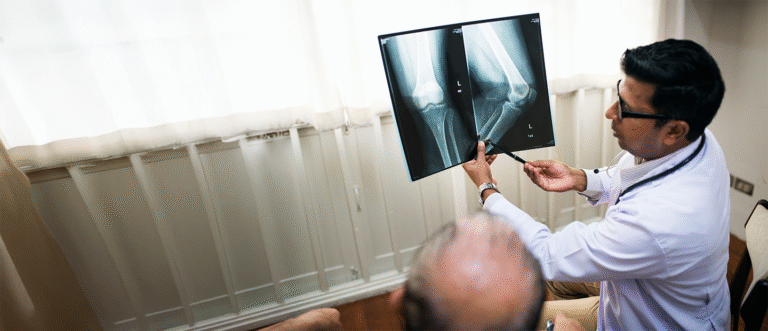
- X-rays: Help detect bone involvement
- PET (Positron Emission Tomography) Scan: Helps find cancer that has spread to other parts of the body
- Ultrasound: Can tell the difference between fluid-filled and solid masses
Biopsy: This is the definitive way to confirm fibrosarcoma. Options include:
- Core needle biopsy: A minimally invasive procedure that’s usually preferred
- Surgical biopsy: May be needed for larger tumors or when needle biopsy isn’t successful
Laboratory Tests:
- Immunohistochemistry: Uses special stains to identify tumor markers
- Vimentin positivity is characteristic of fibrosarcoma
- Tests rule out other similar cancers
Types
Fibrosarcoma is classified into two main types based on the patient’s age and the tumor‘s behavior:
Infantile Fibrosarcoma:
- Occurs in babies, usually within the first two years of life
- Can even be present at birth
- Generally less aggressive than the adult type
- Rarely spreads to other parts of the body
- Has high survival rates, often over 80%
- Usually has the ETV6-NTRK3 gene fusion
- Can be treated with newer targeted therapies
Adult-Type Fibrosarcoma:
- More common in adults between 30-60 years old
- Highly aggressive cancer
- About 80% are classified as high-grade (fast-growing)
- Higher chance of coming back after treatment
- Less favorable outlook compared to the infant type
- Does not usually have the NTRK gene fusion
Stages
Like other soft tissue cancers, fibrosarcoma is staged to determine how far the cancer has spread. This helps doctors plan the best treatment. Staging considers the tumor’s size, grade (how abnormal the cells look), and whether it has spread to lymph nodes or other parts of the body.
Stage I: Low-grade fibrosarcomas
- Stage IA: Low-grade tumor 5 cm or smaller
- Stage IB: Low-grade tumor larger than 5 cm
Stage II: Mid-grade or high-grade fibrosarcomas
- Stage IIA: Mid- or high-grade tumor 5 cm or smaller
- Stage IIB: Mid- or high-grade tumor larger than 5 cm
Stage III: High-grade fibrosarcomas that may involve nearby lymph nodes
- High-grade tumor larger than 5 cm, or any grade tumor that has spread to nearby lymph nodes
Stage IV: Cancer has spread to distant organs
- Most commonly spreads to the lungs and bones of the spine
Treatment
Fibrosarcoma treatment is highly individualized, taking into account the tumor‘s size, grade, location, spread, and the patient’s overall health. A team of specialists works together to provide the best care.
Surgery: Surgery is the main treatment for localized fibrosarcoma:
- Wide-margin excision: Removes the tumor along with a border of healthy tissue
- Limb-sparing surgery: Removes affected tissue while preserving the limb function
- Amputation: Rarely needed, only when the tumor extensively involves vital structures
Radiation Therapy: Often used along with surgery:
- Before surgery: Can shrink the tumor to make surgery easier
- After surgery: Helps eliminate remaining cancer cells and reduce the risk of recurrence
- Palliative treatment: Helps relieve symptoms in advanced cases
- Brachytherapy: Delivers radiation directly to the tumor site
Chemotherapy: The role of chemotherapy in adult-type fibrosarcoma is debated because these tumors often don’t respond well to drugs:
- Mainly used when cancer has spread to other parts of the body
- Common drugs include doxorubicin, actinomycin D, and ifosfamide
- More effective for infantile fibrosarcoma, often using vincristine, dactinomycin, and cyclophosphamide
Targeted Therapy: A promising new approach, especially for infantile fibrosarcoma:
- TRK inhibitors like larotrectinib are effective for infantile fibrosarcomas with NTRK gene fusions
- Can cause significant tumor shrinkage
- May reduce the need for harsh chemotherapy or extensive surgery
Rehabilitation
Rehabilitation is crucial for patients recovering from fibrosarcoma treatment, especially when the tumor affects limbs or requires major surgery. The goal is to restore function, manage pain, and improve quality of life.
Physical Therapy:
- Helps regain strength, flexibility, and range of motion
- Especially important after limb-sparing surgery or amputation
- Prepares patients for using prosthetic devices if needed
Occupational Therapy:
- Helps patients adapt to functional limitations
- Teaches strategies for performing daily activities safely
- Includes training for mobility and transfers
Wound Care:
- Critical after major surgery to prevent infection
- Promotes proper healing
- May require specialized care
Prosthetic Fitting:
- For patients who undergo amputation
- Involves working with specialists to fit appropriate prosthetic devices
- Helps maintain mobility and independence
Complications
Fibrosarcoma and its treatment can lead to various complications that significantly impact a patient’s health and quality of life.
Tumor-Related Complications:
- Local invasion: The growing tumor can compress or invade nearby structures
- Nerve damage: Can cause pain, numbness, or loss of function
- Blood vessel problems: May cause swelling or poor circulation
- Infection: High-grade tumors may develop dead tissue that can become infected
- Metastasis: Cancer spread, most commonly to lungs and bones
Treatment-Related Complications:
- Surgical risks: Including bleeding, infection, and functional impairment
- Radiation side effects: Skin irritation, fatigue, and long-term tissue damage
- Chemotherapy side effects: Nausea, hair loss, low blood counts, and organ damage
- Recurrence: A persistent challenge with high recurrence rates
Prevention
Unfortunately, there is no proven way to prevent fibrosarcoma because its exact cause is unknown. However, understanding risk factors can help with early detection and potentially better outcomes.
Prevention Strategies:
- Know your family history: If you have genetic conditions linked to fibrosarcoma, discuss regular monitoring with your doctor
- Minimize environmental exposures: Avoid known harmful chemicals when possible
- Seek prompt medical evaluation: Have any new or changing lumps checked immediately
- Follow up on existing conditions: Properly manage any pre-existing bone or soft tissue problems
Early Detection:
- Be aware of warning signs like lumps larger than 5 cm
- Pay attention to lumps in deep tissues
- Don’t ignore lumps that cause pain or keep growing
- Regular self-examinations can help catch changes early
Living With Fibrosarcoma
A fibrosarcoma diagnosis can be emotionally challenging, bringing feelings of fear, anxiety, and uncertainty. However, actively participating in your care and working closely with your healthcare team can help you navigate these challenges.
Managing Your Care:
- Understand your treatment plan and ask questions
- Keep track of appointments and follow-up schedules
- Communicate openly with your healthcare team about concerns
Maintaining Wellness:
- Focus on healthy eating and appropriate physical activity
- Get adequate rest and sleep
- Practice stress-reduction techniques like meditation or deep breathing
Ongoing Monitoring:
- Attend all follow-up appointments religiously
- Most recurrences happen within the first two to five years after treatment
- Perform regular self-examinations for new lumps or changes
- Report any new symptoms immediately
Warning Signs to Watch For:
- Fever, chills, or signs of infection
- Persistent cough or breathing problems
- Severe abdominal pain or prolonged diarrhea
- New lumps or swelling anywhere on the body
Key Takeaways
- Fibrosarcoma is a rare but aggressive cancer that develops from connective tissue cells called fibroblasts
- There are two main types: infantile fibrosarcoma (less aggressive, often has NTRK gene fusions) and adult-type fibrosarcoma (highly aggressive with higher recurrence rates)
- Early symptoms include painless lumps or swelling, with pain and functional problems developing as the tumor grows
- Diagnosis requires comprehensive evaluation including physical exam, imaging tests like MRI and CT scans, and definitive biopsy
- Treatment centers on surgical removal with clear margins, often combined with radiation therapy and sometimes chemotherapy
- Targeted therapies offer new hope, especially for infantile fibrosarcoma with NTRK fusions
- Rehabilitation is essential for recovery, and consistent follow-up care is vital for detecting recurrence
- While prevention isn’t possible, awareness of risk factors and prompt evaluation of suspicious lumps can improve outcomes
Sancheti Hospital stands as a leading healthcare institution specializing in comprehensive cancer care and orthopedic treatments. Our multidisciplinary team of experienced oncologists, orthopedic surgeons, radiation oncologists, and rehabilitation specialists is dedicated to providing world-class care for patients with fibrosarcoma and other soft tissue sarcomas.
We understand the complexity of sarcoma treatment and offer state-of-the-art diagnostic facilities, including advanced imaging technologies and specialized biopsy procedures.
Our treatment approach combines the latest surgical techniques, precision radiation therapy, and access to cutting-edge targeted therapies. Beyond treatment, we emphasize comprehensive rehabilitation programs and long-term follow-up care to ensure the best possible outcomes for our patients.
At Sancheti Hospital, we are committed to supporting patients and their families throughout their cancer journey, providing not just medical expertise but also emotional support and guidance every step of the way.
Meet Our Ortho Onco Specialist
Patient Stories & Experiences
The pain in my left knee left me feeling helpless for years. After my treatment here, I can finally say I'm pain-free.
Vinita Singh
The nerves were swollen, and the body went numb. But thanks to Sancheti Hospital, I got a second life!
Parvati

I finally could walk again, a relief I've only felt after the hip pain surgery. I thank the doctors at Sancheti Hospital for their help.
Balaji Kharat

I'm a police officer, and I'm extremely thankful to Sancheti Hospital for treating my fracture without surgery.
Shantilal
My life has completely changed after the knee replacement surgery at Sancheti Hospital. It's like I can finally live again!
Kalpana Lepcha
The knee pain I've carried for years finally went away with the help of Sancheti Hospital.
Karuna

I can't believe that I get to finally live a normal and happy life, all thanks to the knee surgery I had at Sancheti Hospital.
Kishore Bhosle
Other Conditions
Frequently Asked Questions
What is the main difference between infantile and adult-type fibrosarcoma?
Infantile fibrosarcoma affects babies under two years old, is generally less aggressive, and often has specific NTRK gene fusions that can be treated with targeted therapies. Adult-type fibrosarcoma occurs in middle-aged and older adults, is highly aggressive, and has a higher recurrence rate with a less favorable prognosis.
How is fibrosarcoma diagnosed?
Diagnosis involves a comprehensive physical exam, advanced imaging tests like MRI and CT scans, and a definitive biopsy. Special laboratory tests called immunohistochemistry help distinguish fibrosarcoma from other similar tumors.
What are the main treatment options for fibrosarcoma?
The primary treatment is surgical removal of the tumor with clear margins. Radiation therapy is often used before or after surgery. Chemotherapy is typically reserved for cases where cancer has spread. Targeted therapies are particularly effective for infantile fibrosarcoma with NTRK fusions.
Can fibrosarcoma come back after treatment?
Yes, fibrosarcoma has a high recurrence rate, especially adult-type fibrosarcoma. Most recurrences happen within the first two to five years after treatment, which is why regular follow-up care and monitoring are so important.
Is there a way to prevent fibrosarcoma?
Currently, there’s no known way to prevent fibrosarcoma because its exact cause is unknown. However, knowing your risk factors and seeking immediate medical attention for any suspicious lumps can lead to earlier diagnosis and potentially better outcomes.
Home
Patient Login
International patients
Contact Us
Emergency
Download Reports